 By Nitesh Shrivas
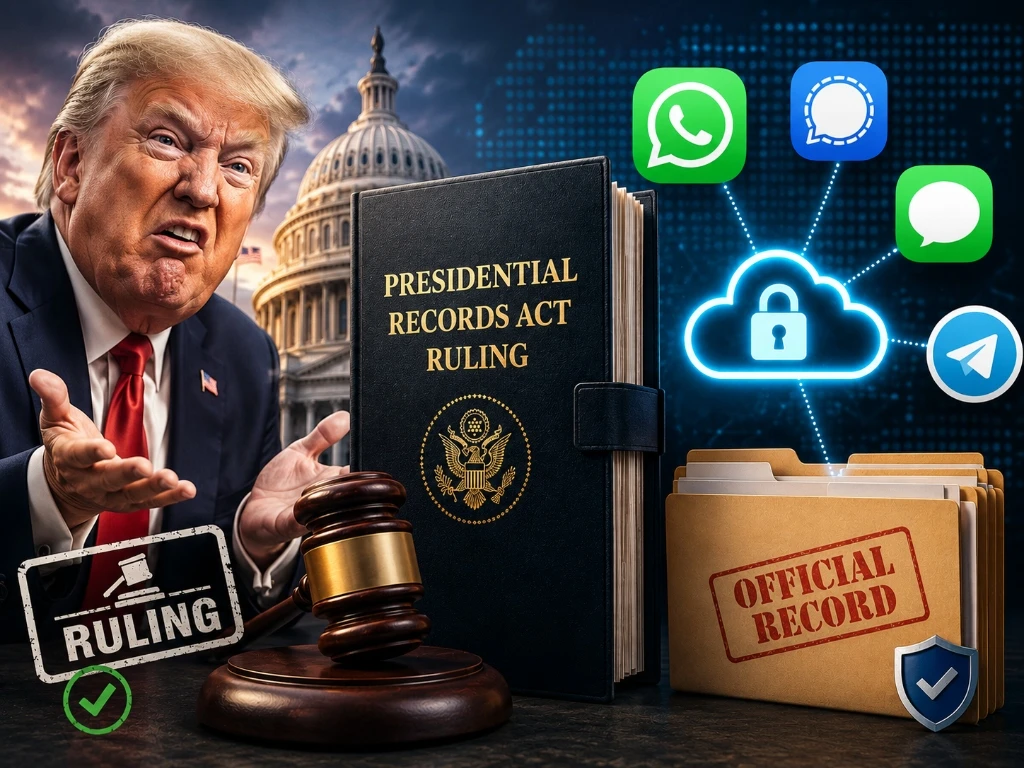
The recent presidential records act ruling has created a huge debate in politics, law, technology, and digital communication. As a web developer from India, I believe this issue is not only about politics. It is also about how modern communication systems are failing to keep up with today’s digital world.
The ruling said that White House officials must preserve official communications, even if those communications happen through personal messaging apps like WhatsApp, Signal, or SMS. This decision has opened many discussions about privacy, transparency, cybersecurity, and digital compliance.
In this blog, I want to explain the biggest pain points created by the presidential records act ruling and how modern online tools and software solutions can solve them.
"The core of digital governance lies not in restricting how we communicate, but in implementing smart technology that bridges the gap between compliance requirements and user convenience."
Understanding the Presidential Records Act Ruling
The Presidential Records Act (PRA) was created in 1978 to make sure presidential records are preserved as public property. Recently, a federal judge ruled that the Trump White House must continue following this law.
The court ordered White House staff and senior advisers to preserve official communications, including messages sent through unofficial channels and private apps.
This ruling creates a serious challenge because today’s government officials and business leaders use many modern communication tools that were never imagined in 1978.
As someone working in technology and web development, I can clearly see a gap between old laws and modern communication systems.
Major Pain Points Created by the Ruling
The transition from analog archiving to archiving encrypted, fragmented modern communications brings significant friction. Here are the five biggest challenges organizations face today:
Communication Scattered Across Multiple Apps
Official conversations now happen across many platforms: WhatsApp, Signal, Telegram, SMS, Slack, Email, and Zoom chats. This creates confusion because important records are no longer stored in one central system. When data is spread everywhere, tracking conversations, preserving history, and responding to legal requests becomes extremely difficult.
Risk of Accidental Record Deletion
Modern messaging apps heavily feature disappearing messages and user-controlled encryption keys. Officials may accidentally or reflexively delete critical communications, resulting in incomplete audit trails and creating massive legal and operational risks.
Privacy vs. Transparency Conflict
When government employees or corporate executives use personal phones for work-related tasks, the boundary blurs. Determining which messages are official and subject to archiving versus which ones are private creates a deep conflict between public accountability and personal privacy.
Cybersecurity Risks
Archiving personal messaging channels introduces new vectors of vulnerability. Creating centralized repositories for end-to-end encrypted chats makes those systems high-value targets. If not properly secured, these archives could lead to severe data leaks or unauthorized hacker access.
Outdated Systems and Old Laws
The Presidential Records Act was drafted in 1978—long before smartphones, cloud environments, or instant messengers existed. Trying to force modern, dynamic, peer-to-peer web communication into rigid, decades-old legal definitions creates compliance confusion.
Smart Digital Solutions for These Problems
As a web developer from India, I believe technology itself can solve most of these challenges. Instead of depending only on manual workflows or administrative threats, governments and organizations need automated, secure digital systems.
Solution 1 Centralized Communication Archive Platform
The best long-term solution is creating a secure, unified archiving platform. By leveraging official APIs for WhatsApp, Slack, Teams, and Email, organizations can automatically ingest, index, and organize communications into a single, encrypted, and highly searchable registry.
Solution 2 AI-Based Message Classification
Artificial intelligence can analyze communications in real time (or during batch uploads) to flag records as "Official," "Personal," "Sensitive," or "Legal-Risk." For example, if a government employee discusses policy updates on a personal channel, the AI (compliant with frameworks like the NIST AI Risk Management Framework) can detect the context and prompt it to be archived automatically, eliminating human error.
Solution 3 Secure Cloud-Based Record Management
Using next-generation cloud infrastructure, we can build tamper-proof storage solutions. Incorporating features like write-once-read-many (WORM) storage, end-to-end envelope encryption, multi-factor authentication (MFA), and role-based access control (RBAC) ensures records remain audit-ready and secure from leaks.
Solution 4 Compliance Dashboard for Organizations
Administrators need simplified compliance dashboards to monitor data health. Similar to our custom analytics dashboards like the ROI Calculators, a modern dashboard allows compliance officers to run secure search queries across all channels, detect anomalous behavior (like enabling disappearing messages on official chats), and export clean PDF/JSON files for regulatory filings.
Solution 5 Mobile Device Management (MDM) Systems
By implementing containerization through MDM tools, organisations can partition a user's phone into separate secure profiles. Work messaging remains sandboxed, controlled, and auto-archived, while the user's personal partition stays completely confidential and off-limits to compliance trackers using protocols like Android Enterprise.
Why This Creates Huge Opportunities for Tech Companies
From my perspective as a web developer, this regulatory pressure creates a massive blue ocean opportunity for software vendors and developers to build new digital compliance tools:
- SaaS Startups: Can build custom, plug-and-play API connectors for compliance archiving. Have a concept? You can submit your startup idea here. Startup trends in SaaS are growing fast, as reported on TechCrunch.
- AI Developers: Can train highly specialized compliance models for classifying official records.
- Cybersecurity Firms: Can consult and implement high-security zero-trust vaults for storing archives.
- Cloud Infrastructure Providers: Can offer regional, sovereign-compliant storage solutions.
This market will continue to grow exponentially as digital governance and legal standards tighten globally year after year.
My Final Thoughts
The Presidential Records Act ruling is much bigger than politics. It shows a growing global problem: Modern communication technology is evolving faster than legal systems.
Governments, companies, and organizations now need smarter digital infrastructure to handle transparency, compliance, privacy, security, and record management.
The future belongs to technology platforms that can solve these complex compliance and communication challenges in simple, secure, and scalable ways. This ruling is a turning point that will push governments and businesses toward modernizing their digital record systems through AI, cloud hosting, and cybersecurity technologies like ISO 27001.
The world is moving rapidly toward digital governance, and organizations that adapt their technical infrastructure quickly will lead the future.